Same family,
since the 1600s.
Ollasgården sits on a quiet headland in Dalarna — a country estate held by the same family for some four hundred years, restored slowly and lightly inside one of Sweden's seven UNESCO biosphere reserves.
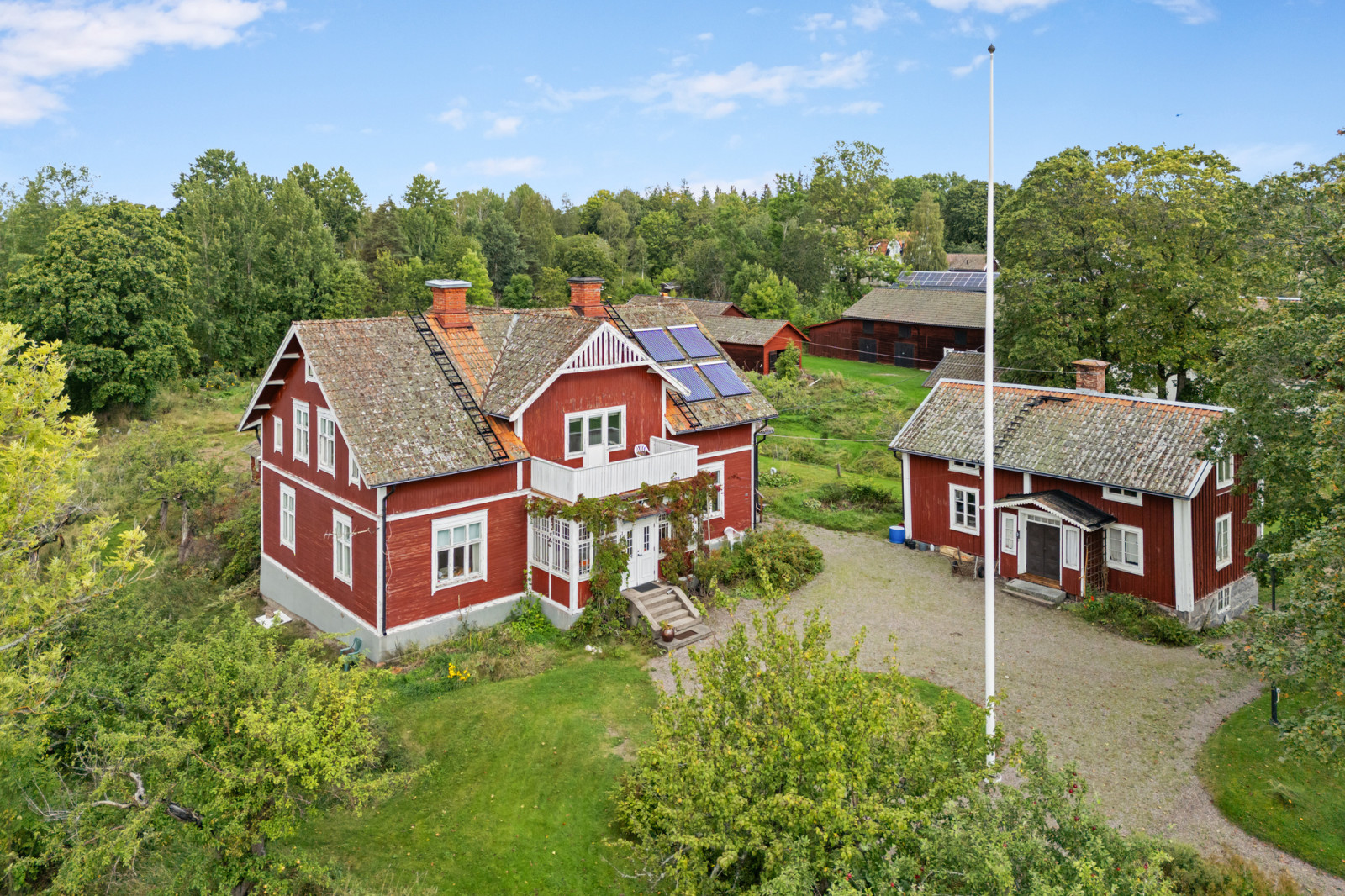
Earlier generations lived off what this land gave them — timber from the forest, grain from the meadow, fish from the lake. The estate carried itself for centuries.
Bäsinge has long been recognised as a place of cultural importance, and our approach to the estate is simple: nothing on the outside changes. The colours stay. The silhouettes stay. The silence stays.
Inside, we work quietly — lime wash, linseed paint, beeswax, reclaimed timber. Old rooms warmed by tile stoves. A bakery still drawing on its original oven. A kitchen garden, an orchard, hens in the yard, and two heritage grains still grown on the land that has been turned over for centuries.
Inside the Nedre Dalälven Biosphere Reserve.
Ollasgården sits inside the Nedre Dalälven Biosphere Reserve — a UNESCO Man and the Biosphere site spanning the lower Dalälven river system. There are only seven such reserves in all of Sweden. The designation recognises a landscape where biodiversity, cultural heritage and small-scale farming have been held in balance, and asks the people who live and host here to do the same.
We farm and host to those standards: small flock, hand work, heritage seed, and a feather-light hand on everything that has stood here longer than we have.
A working village, not a museum.
Bäsinge is still a living village. A small slaughterhouse and farm shop sit just up the road, a heritage sawmill works in the same regional style our restoration timber comes from, and a little cultural house runs concerts and exhibitions through the year.
Ninety minutes from Stockholm, by train or by car. Fifty-five from Uppsala. Ninety from Arlanda. Close enough to slip away on a Friday — far enough to feel away.